
When you’re delivering chilled food, maintaining the right temperature throughout the journey is essential. From meal kits and fresh food to seafood and other temperature-sensitive products, the right packaging can make a significant difference.
Chilled boxes are designed to provide insulation and help protect products from external temperature changes during transportation.
In this guide, we’ll explain how chilled boxes work, what they are used for and how to choose the right solution for your business.
What Are Chilled Boxes?
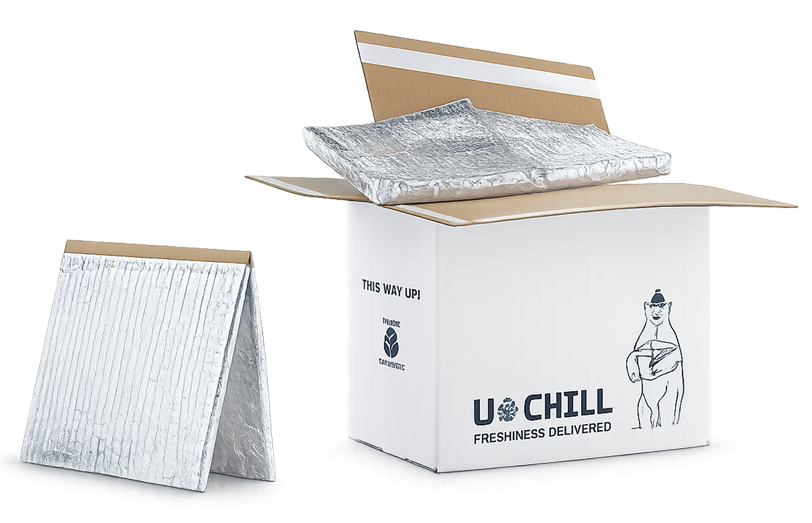
Chilled boxes are insulated packaging systems designed to help keep temperature-sensitive products cool during transportation.
They are commonly used by:
- Food manufacturers
- Online food retailers
- Meal kit companies
- Seafood suppliers
- Butchers and meat suppliers
- Fresh food businesses
- Pharmaceutical and healthcare businesses
A chilled box is typically used together with an insulating material and a cooling product such as a gel pack or cold pack.
How Do Chilled Boxes Work?
The basic principle is simple: reduce heat entering the package while providing an appropriate cooling source.
A typical chilled packaging system can include:
Outer box → Thermal insulation → Product → Cold/gel packs
The insulation slows heat transfer, while the cooling packs absorb heat as they warm.
The exact configuration depends on factors such as:
- Product temperature
- Box size
- Product quantity
- Transit duration
- External temperature
- Required temperature range
Why Is Chilled Packaging Important?
Temperature-sensitive products can be affected by extended exposure to unsuitable temperatures.
For food businesses, effective chilled packaging can help protect product quality throughout transportation.
This is particularly important for businesses delivering products directly to customers.
Chilled Boxes for Food Delivery
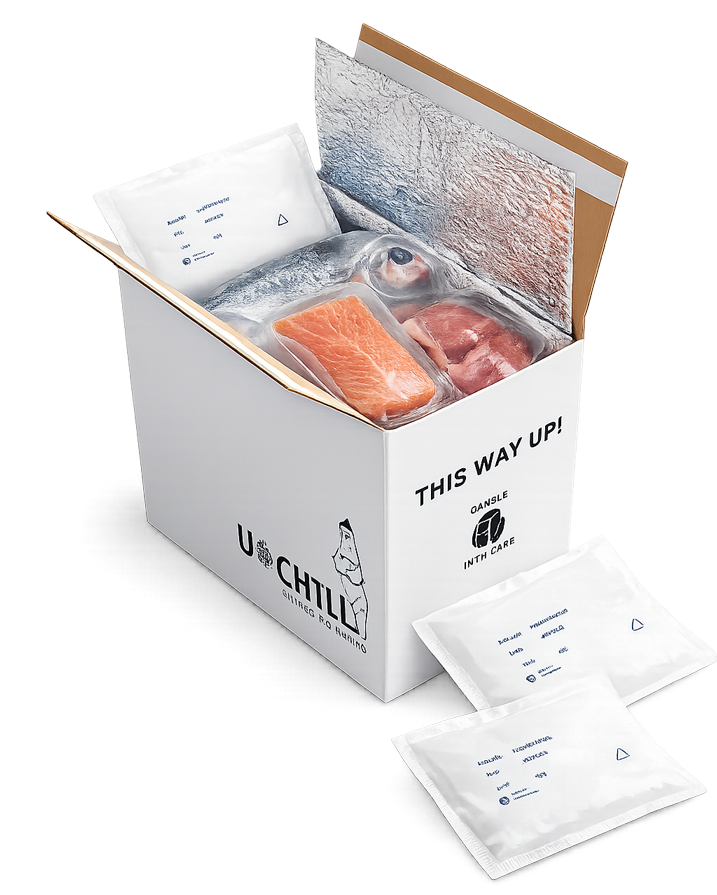
The growth of online food delivery has increased the need for reliable chilled food packaging.
Meal kits, fresh meat, seafood, dairy products and prepared foods may all require controlled temperatures during transportation.
A suitable chilled shipping system should consider both the product and the delivery journey rather than simply choosing the largest available box.
How Do You Choose the Right Chilled Box?
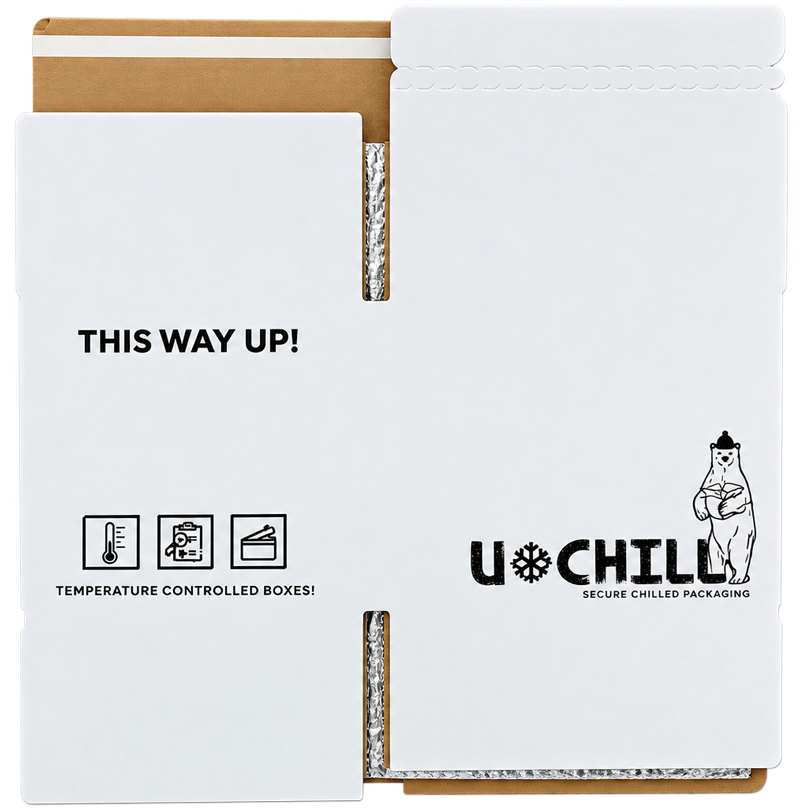
Consider these five factors:
1. Product size
Choose packaging that provides enough space for the product without excessive unused volume.
2. Required temperature
Understand whether your product needs chilled or frozen conditions.
3. Transit time
A short local delivery may require a different packaging configuration from a longer delivery.
4. Cooling requirements
Consider the number, size and type of cold packs or gel packs required.
5. Insulation
The insulation material and thickness can affect the thermal performance of the overall packaging system.
Chilled Boxes vs Frozen Food Packaging
Although both use insulated packaging, chilled and frozen products have different requirements.
Chilled packaging is designed for refrigerated products, while frozen food packaging is intended for products that need to remain frozen during transportation.
Choosing the correct solution is therefore important.
UCHILL Chilled Packaging Solutions
UCHILL provides chilled boxes, insulated packaging, thermal liners and cooling solutions for businesses shipping temperature-sensitive products.
Whether you’re delivering meal kits, seafood, fresh food or other chilled products, our team can help you identify a suitable packaging configuration.
Need help choosing chilled packaging?